

Heavy manual and repetitive workload
Emails, documents, follow-ups and administrative tasks absorb a significant share of the team's time.
Real operating environments
We help service businesses reduce manual tasks, improve consistency and make better use of their information through AI applied to daily operations.

Professional services depend heavily on people, communication and information, which often translates into operational friction and too much manual work.
Emails, documents, follow-ups and administrative tasks absorb a significant share of the team's time.

Information lives across email, documents, CRM systems and spreadsheets, which makes continuity difficult.

The same work may be handled differently by different people, creating variability and mistakes.

It is not always clear where workload sits, what matters most or how the team is performing.

As the business grows, complexity and operational pressure grow with it.
AI helps reduce manual work, organize information and provide better support for everyday decisions in service-heavy businesses.

01
AI helps automate emails, document handling and repetitive admin work that currently consumes time every day.
02
It also helps bring order to information spread across inboxes, documents and systems, making it easier to find and use.
03
By summarizing information and highlighting priorities, it supports better day-to-day decisions.
04
It can standardize outputs and workflows, reducing variability and avoidable mistakes across teams.
These are some of the ways AI can ease daily work and improve internal organization inside service businesses.

Classify, summarize and prioritize emails so teams spend less time managing inboxes and more time on meaningful work.
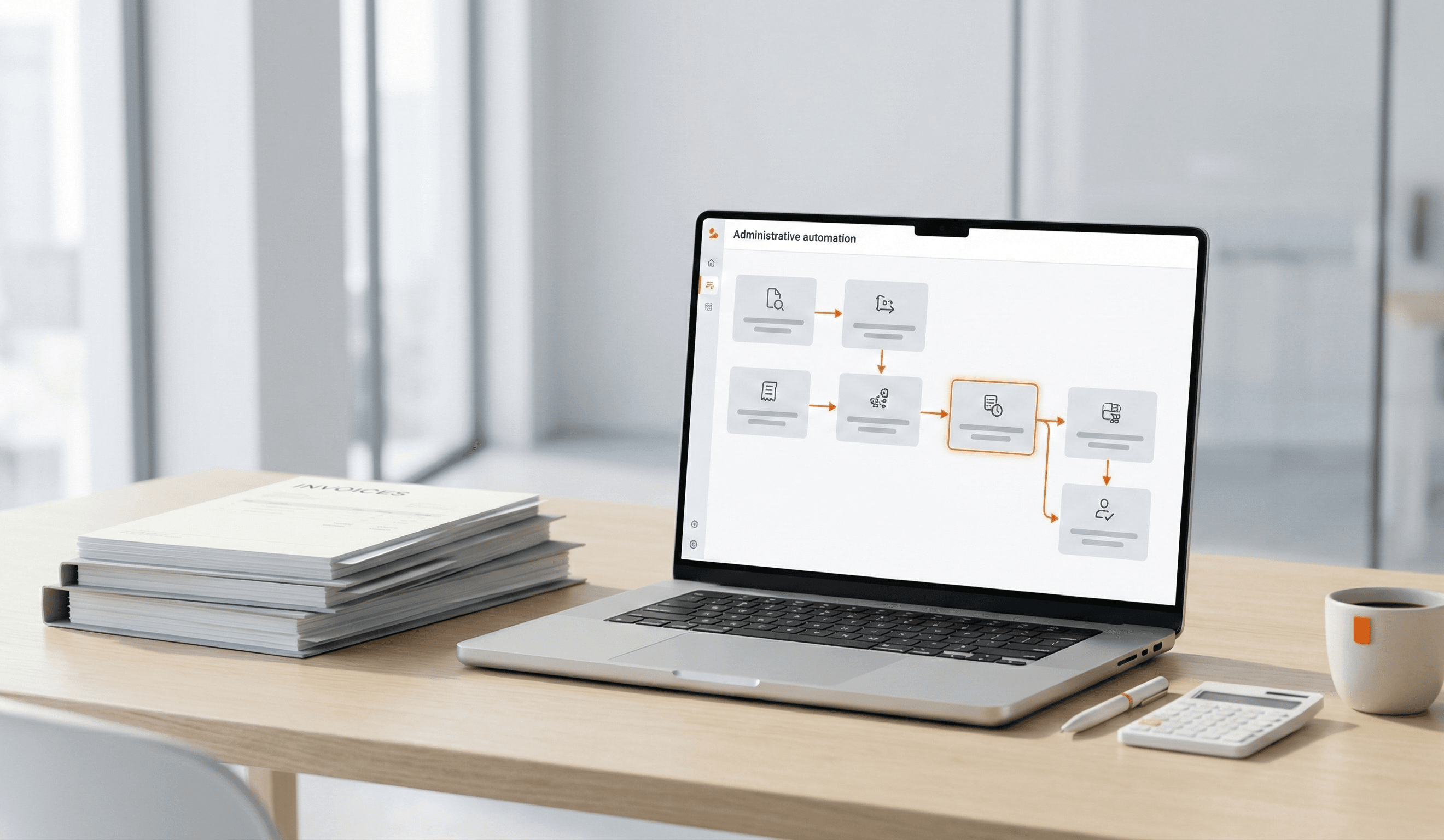
Extract key information from documents, contracts or reports and generate clearer summaries.

Draft replies, follow-ups or explanations based on the information and context already available.

Help people find answers faster inside documents, procedures and historical communication.

Create better visibility into tasks, priorities and work in progress.
Service businesses depend on information spread across many tools and systems that would work better if they were more connected.

01
Emails, calendars, messages and communication histories with clients or internal teams.
02
Contracts, proposals, reports, presentations and internal documentation.
03
CRMs, project tools, task trackers and customer records.
04
Invoices, budgets, timesheets and internal reporting.
05
Spreadsheets used for tracking, analysis and reporting.
AI becomes especially useful here when operations depend on communication, knowledge and manual processes that are starting to overwhelm the team.
01
Businesses handling a high volume of emails, messages, requests and follow-ups every day.
02
Teams where documentation, reporting, coordination and admin tasks consume too much time.
03
Organizations working with customer data, documents and internal knowledge spread across multiple tools.
04
Service businesses growing fast and trying to avoid scaling manual work at the same pace.
Tell us how your service business works and we can explore how AI could reduce manual workload and improve day-to-day efficiency.
Book a free consultationWe help service businesses reduce manual tasks, improve consistency and make better use of their information through AI applied to daily operations.
Book a free consultationProfessional services depend heavily on people, communication and information, which often translates into operational friction and too much manual work.

Emails, documents, follow-ups and administrative tasks absorb a significant share of the team's time.

Information lives across email, documents, CRM systems and spreadsheets, which makes continuity difficult.

The same work may be handled differently by different people, creating variability and mistakes.

It is not always clear where workload sits, what matters most or how the team is performing.

As the business grows, complexity and operational pressure grow with it.
AI helps reduce manual work, organize information and provide better support for everyday decisions in service-heavy businesses.
AI helps automate emails, document handling and repetitive admin work that currently consumes time every day.
It also helps bring order to information spread across inboxes, documents and systems, making it easier to find and use.
By summarizing information and highlighting priorities, it supports better day-to-day decisions.
It can standardize outputs and workflows, reducing variability and avoidable mistakes across teams.
These are some of the ways AI can ease daily work and improve internal organization inside service businesses.
Classify, summarize and prioritize emails so teams spend less time managing inboxes and more time on meaningful work.
Extract key information from documents, contracts or reports and generate clearer summaries.
Draft replies, follow-ups or explanations based on the information and context already available.
Help people find answers faster inside documents, procedures and historical communication.
Create better visibility into tasks, priorities and work in progress.
Service businesses depend on information spread across many tools and systems that would work better if they were more connected.
Emails, calendars, messages and communication histories with clients or internal teams.
Contracts, proposals, reports, presentations and internal documentation.
CRMs, project tools, task trackers and customer records.
Invoices, budgets, timesheets and internal reporting.
Spreadsheets used for tracking, analysis and reporting.
AI becomes especially useful here when operations depend on communication, knowledge and manual processes that are starting to overwhelm the team.
Businesses handling a high volume of emails, messages, requests and follow-ups every day.
Teams where documentation, reporting, coordination and admin tasks consume too much time.
Organizations working with customer data, documents and internal knowledge spread across multiple tools.
Service businesses growing fast and trying to avoid scaling manual work at the same pace.
Tell us how your service business works and we can explore how AI could reduce manual workload and improve day-to-day efficiency.
Book a free consultation